
The National Library of Iran has 10 specialized halls, each of which provides informational resources based on specific topics. Here is an introduction to some of these halls:

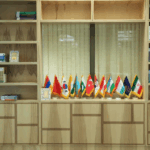
The National Library of Iran, with the inauguration of the” Gate of Nations “, now hosts an international treasure trove of culture, literature, and art from various nations. This hall, the result of cultural collaborations and the donation of valuable resources by different countries, has now become one of the richest sections of the library, welcoming enthusiasts and researchers.
It all began with the first step by a friendly nation; when in 2010 (1389 Persian calendar), South Korea, by donating a precious collection, founded the “South Korea Room.” Gradually, this cultural initiative was welcomed by other countries, and through the signing of numerous memoranda of understanding between the National Library and Archives of the Islamic Republic of Iran and cultural institutions of other nations, this space embarked on a growing trajectory. A hall where every corner depicts a narrative of friendship and cultural commonality.
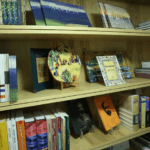
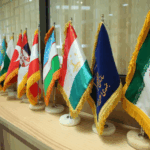
In this hall, besides donated books, visual works and cultural symbols of the participating countries are also displayed. Colorful flags and captivating images of natural landscapes and historical monuments have created a dynamic and international atmosphere for visitors.
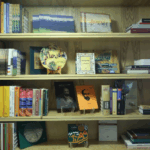
So far, countries including South Korea, Turkey, Serbia, Tajikistan, Kazakhstan, Austria, China, India, Pakistan, Uzbekistan and Armenia have contributed to the enrichment of this hall by donating their resources. These valuable works provide visitors with the opportunity to gain a deeper familiarity with the culture and civilization of other nations. Currently, the donated collection from Uzbekistan is displayed on the ground floor of the specialized halls in a space known as the Uzbekistan Room.
The Gate of Nations is located on the first floor of the specialized halls of the General Directorate of Information of the National Library and is ready to host enthusiasts and those eager for global culture.


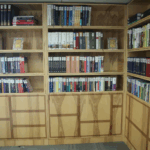





The Manuscripts Section of the National Library was established in 1937 with approximately 3,000 manuscripts from the Public Library of Ma’aref. Over time, the collection grew steadily, reaching 5,300 volumes of original and photographic manuscripts by 1976.
Efforts to acquire more manuscripts and lithographic books continued through donations and purchases, significantly accelerating after 2006. Currently, the Manuscript and Rare Books Repository holds over 25,400 volumes of manuscripts and 27,300 volumes of lithographic books.
Known as the “Public Library of Ma’aref,” the manuscript collection had around 300 volumes in 1934–1935. A catalog in two volumes, titled “List of Manuscripts in the Public Library of Ma’aref”, was prepared by the late Abdulaziz Javaherkalam, listing 348 manuscripts and 46 Facsimile manuscripts alphabetically by title.
A commission including prominent scholars (Iraj Afshar, Mojtaba Minavi, Abbas Zaryab Khoei, Mohammad Taqi Danesh-Pajouh, and Master Sayyed Abdullah Anwar) created detailed bibliographic and codicological records for the library’s manuscripts.
From 1947 to 1979, Seyyed Abdullah Anwar cataloged 10 volumes of manuscripts, listing 3,082 Persian manuscripts (volumes 1–6) and 1,975 Arabic manuscripts (volumes 7–10). Subsequently, over 2,700 additional Arabic manuscripts were cataloged in volumes 11 to 19 of the National Library’s manuscript catalogs between 1993 and 2002. These were compiled by Dr. Habibollah Azimi, Dr. Ali Naqi Monzavi, Dr. Amireh Zamiri, and Zahra Me’iri. Volumes 21 and 22, which focused on prayer books and Qur’ans, were cataloged by Dr. Reza Khanipour.
Since April 2007, the process of storage and retrieval of information on manuscripts and lithographic books has been initiated through the National Library of Iran’s integrated system (called RASA). This system has been implemented based on the IranMARC format (a localized version of UNIMARC). Additionally, alongside this process, the project of digitizing these resources is also underway to facilitate electronic access to them.
All cataloged information is accessible via the National Library and Archives of Iran official website: http://nlai.ir.
Khaje Nasir al-Din al-Tusi Hall (Periosicals)
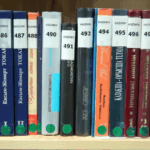
The Periodicals Hall of the National Library is located on the basement floor and the western wing of the halls, housing a comprehensive archive of periodicals in Persian, English, and Arabic languages.
The collection includes more than 17,500 titles (approximately 2.5 million copies) in the form of newspapers, magazines, newsletters, special issues, student publications, and some calendars. These materials have been gathered and organized through donation, gift, and purchases both from within Iran and abroad. The periodicals are in various languages including Persian, Arabic, Turkish, Kurdish, Urdu, English, German, French, and others, covering the period from the Qajar era (the emergence of press in Iran) to the present.
Among the most valuable resources in the collection are Rahnama, Setareh Iran, Asr-e Enqelab, Asr-e Jadid, Falahat o Tejarat, Qushun, Kushesh, Majles, Mira’at al-Safar, Mishkah al-Hadhar and Nameh Farangestan.
Notable reprinted periodicals in this collection include Iran-e Soltani, Iran-e No, Daily Iran, Dawlat Aliyah Iran, Official Newspaper, Milat-e Saniyah Iran, Shokufe, Sobh-e Sadeq, Sur-e-Esrafil, and Ma’arif.
Among the valuable foreign-published resources in the collection, the periodicals donated by the German Reich to the Iranian court are worth mentioning.
Kamāl ud-Dīn Behzād Hall (Non-book Materials)
This hall is dedicated to preserving non-book materials, which include various documents and materials in formats other than books and periodicals. It holds over 47 types of resources, with a total of about one million items.
Ibn Nadim Hall (Reference and Bibliography)
Located on the ground floor and on the east side of the library, this hall is dedicated to reference and bibliographical resources.
Razi Hall and the Science and Technology Repository
This hall is located on the ground floor and on the west side of the library. It houses books in the fields of science and technology, including mathematics, astronomy, physics, chemistry, biology, geology, paleontology, computer science, engineering, medicine, and agriculture.
Rudaki Hall (For the Blind and Disabled)
This hall is dedicated to providing services to the blind and visually impaired. It offers a collection of study and research materials tailored to their needs.
Ibn Sina Hall and Human Sciences Repository
Located on the first floor (Level 1+) and on the west side, this hall holds books related to the humanities, including philosophy, religion, psychology, history, geography, and literature.
Farabi Hall and Repository of Social Sciences and Arts
This hall, located on the first floor (Level +1) and on the southeast side of the library, holds a collection of books on social sciences, law, arts, music, and architecture.
Sohrvardi Hall (Iranology and Islamology)
Since its establishment in 1937, the National Library of Iran has not only been collecting a wide range of resources but also focused on gathering Iranology books.
Iranology is a branch of Oriental studies that is divided into two main categories: pre-Islamic Iran and post-Islamic Iran. The foundation of the knowledge of Iranian works by Western Iranologists and the collection of their writings began in the mid-Qajar era during the reign of Nasser al-Din Shah.
A few Iranians who had traveled abroad for their education or those who were familiar with foreign languages, mainly French, began acquiring some of these works. Subsequently, the Dar al-Fonun library and the Royal Library also purchased some of these books.
For a long time, such books were mostly found in the private libraries of Iranian researchers, until, for the first time, with the establishment of the National Library in 1937, the responsibility of collecting them was officially assigned to a national institution.
The initial collection of the National Library consisted of books donated by Western Iranologists, the Dar al-Fonun Library, the Ma’arif Library, the Royal Library, the Russian Loan Bank Library (which had many books in German and French), and shortly thereafter, books gifted by Hitler to the Iranian government were also added to this collection.
In 1962, during the presidency of Mr. Iraj Afshar at the National Library, all Iranology books were separated from the foreign books collection, and for the first time, an Iranology section was officially established in the National Library.
After the Islamic Revolution, several collections, including the Pahlavi Library and the Dr. Fakhr al-Din Shadman collection, were transferred to and donated to the National Library.
In 1990, according to the new statute passed by the Islamic Consultative Assembly, the Center for Iranology and Islamology was officially established. Later, with the inauguration of the new National Library building in 2004, the Iranology and Islamology section was also opened.1